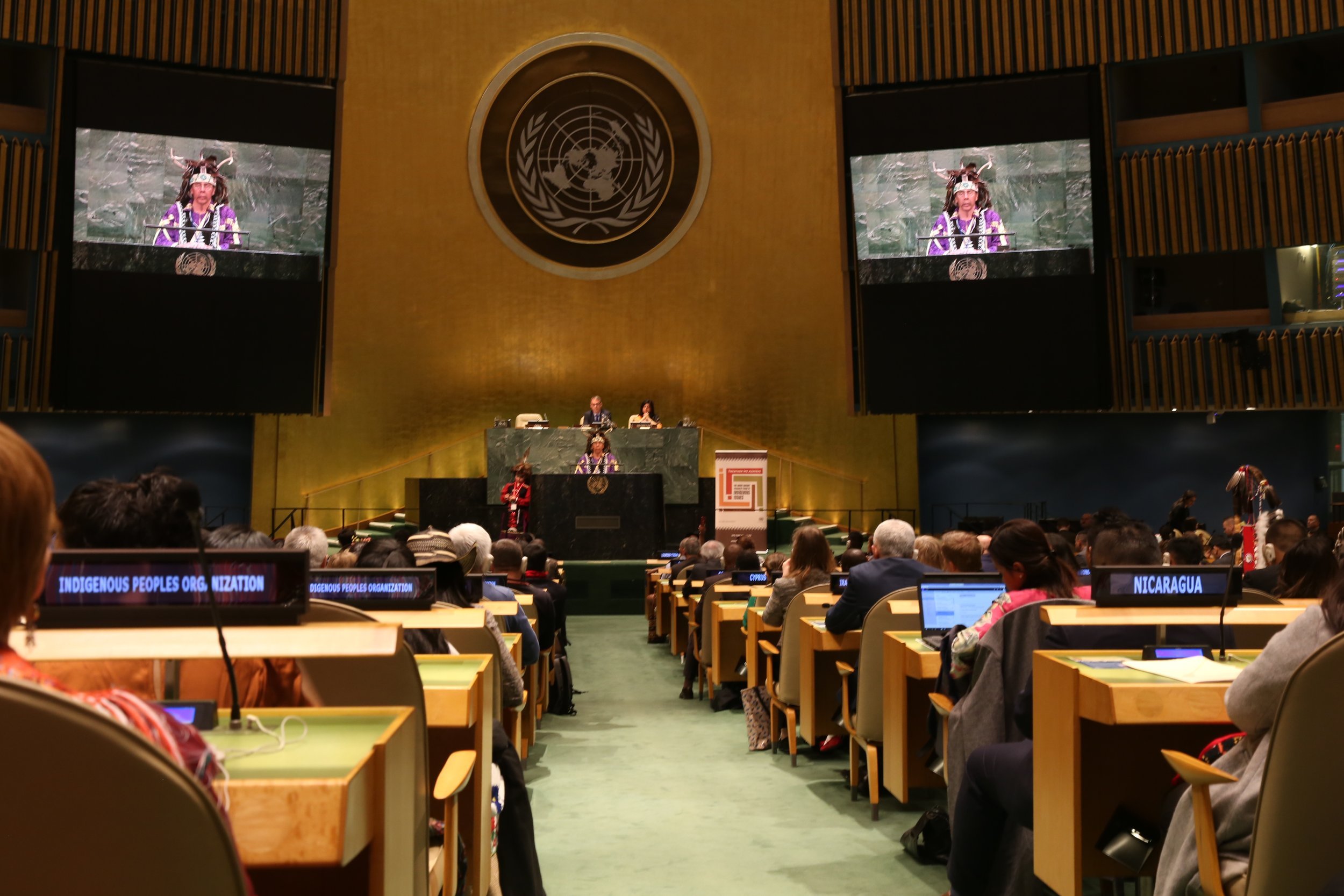
Last Friday May 31, the 12th Session of the UNPFII closed. Below are highlights from another extraordinary session.

Click here for statements on the opening of the session, featuring statements from Project Access Alumnus, Andrea Landry.

Click here for a video overview of highlights from the session.

From the Office of the UNPFII Secretariat, some highlights include:

Culture, education and health were at the forefront of discussions throughout the twelfth session of the Permanent Forum on Indigenous Issues, a panel of experts said today, stressing that those basic human rights must be woven into the post-2015 development agenda to ensure that indigenous peoples’ voices were respected around the world.

Speaking at a Headquarters press conference, Myrna Cunningham Kain, Forum member from Nicaragua, underscored:  “This has been a very important year,” as the Forum had placed particular emphasis on the implementation of recommendations in those areas.  While there had been “isolated” good practices of Governments respecting indigenous rights, a big gap remained between the well-being of indigenous peoples and the rest of society.

Accompanying Ms. Kain on the panel was Raja Devasish Roy, Forum member from Bangladesh, and Susann Funderud Skogvang, Associate Professor at University of Tronsø, Sami, Norway.

Giving an overview of the twelfth session, which concludes tomorrow, Ms. Kain said that, in the area of health, concerns had been raised over the sexual and reproductive rights of indigenous women, the increasing incidence of both HIV/AIDS in indigenous communities and mental health problems among indigenous youth.  Further, changing food patterns meant that diabetes was on the rise in many communities.

In the area of education, she said the loss of indigenous languages was also of great concern, especially as indigenous universities lacked State support for new initiatives.  The area of culture, as well, was linked with the lack of recognition for indigenous land rights and the “extractive” model of development.

In the broader area of human rights, she cited increasing violence against indigenous human rights defenders and indigenous journalists, especially those who managed small radio programmes in isolated communities.  The World Conference on Indigenous Peoples, to be held in September 2014, would offer an avenue for advocating an end to such discrimination.  Indigenous representatives would soon participate in the Global Indigenous Preparatory Conference in Alta, Norway, in June of this year.

“We are counting on States to use information coming out of Alta as the basis for an outcome document,” she said, urging Governments to create space for indigenous peoples’ participation.  Further, that outcome would pave the way for inclusion of indigenous rights in the post-2015 development framework.

Touching on several “firsts”, Mr. Roy said the Caucus for Indigenous Peoples with Disability had participated in its first Forum session, casting light on how disabled persons’ needs were often unaddressed.  Many participants also called for creating a voluntary mechanism that would handle complaints, particularly over land.

The Forum also held, for the first time, a comprehensive dialogue with five international financial institutions, he told correspondents.  Those institutions included:  the World Bank, Inter-American Development Bank, Asian Development Bank, African Development Bank and the International Finance Corporation.  During the ensuing discussion, delegates raised questions over the World Bank’s indigenous peoples’ policy, which was under review, and specifically, its position on free, prior and informed consent.  In addition, they pressed the African Development Bank to create an indigenous peoples’ policy, perhaps using the model used by the Asian Development Bank.  Generally, there had been “very encouraging” engagement with African countries that were increasingly recognizing indigenous rights.

Rounding out the panel, Ms. Skogvang said “the Arctic is hot” — both in terms of temperature and interest.  The Arctic Council — an intergovernmental forum that addressed issues faced by the Arctic Governments and the indigenous peoples — recently agreed to include six new nations, including China, as observer States, as a changing climate had opened the region to more economic and political competition.  Melting sea ice had opened new sea routes and had made drilling possible.  Mineral resources had been found.  It was no coincidence that the best-managed fish stocks in the world were found in the Arctic.

However, the area was also home to the Inuit peoples, she explained.  In this changing picture, their rights to free, prior and informed consent were not being respected.  Nor were their rights to marine resources.  International legal standards developed over the last decade, combined with a greater focus on the environment, must, she emphasized, lead to a new orientation for international law, including the Law of the Sea.

Answering questions, Ms. Kain said indigenous journalists were targeted because they were spreading information about the lack of respect for indigenous rights, especially by the extractive industries.  Small radio programmes often did not have Government authorization because they were the voice for indigenous peoples.

To queries about tourism, Ms. Kain told reporters that the Forum would soon have a recommendation on tourism.  “We have a lot of knowledge that should be considered in formulating the sustainable development agenda”, she said.  “We can share that knowledge”.

Mr. Roy pointed out that indigenous peoples often did not reap the economic benefits of Governments showcasing their cultures for tourism purposes.  That was why they were advocating that culture be added as a “fourth pillar” of sustainable development.

Responding to an inquiry about the Chittagong Hill Tracts Accord, Mr. Roy said a Forum study had been carried out in 2010, with timelines set and focal institutions identified for implementing the unimplemented provisions of the Accord.  The Bangladesh Government had focused on what had been accomplished.  However, indigenous peoples focused on what had not been done, including among others, demilitarization of area and rehabilitation of internally displaced persons, including those from India.  Although the Government had ratified almost every human rights treaty available, the problem was one of implementation.  The Forum was seeking ways to assist in putting the Accord fully into practice.

To a final question, Ms. Skogvang said indigenous peoples were concerned about the Arctic’s opening to observer countries, especially to those far from the region.  China had agreed to respect indigenous peoples.  Still, she said, “we don’t know yet, but we are a little concerned”.  There was a good legal framework between the Sámi Parliament and the Norwegian Government.  Nonetheless, there were many challenges vis-à-vis the reindeer herding area, due to mineral exploitation.  Generally, Governments were in a rush to find resources before property rights were identified.

Posted in Featured, News | Leave a comment

Post a Comment

Your email is never published nor shared. Required fields are marked *

*
*

You may use these HTML tags and attributes: <a href="" title=""> <abbr title=""> <acronym title=""> <b> <blockquote cite=""> <cite> <code> <del datetime=""> <em> <i> <q cite=""> <strike> <strong>

22 May 2013, New YorkMr. Chairperson,
Distinguished members of the Permanent Forum on Indigenous Issues,
Representatives of Indigenous Peoples and Members States,

Friends and colleagues

It is a great pleasure to be able to again address the Permanent Forum and all those attending this year’s session. As always, I am grateful for this opportunity to share some of my experiences over the past year as Special Rapporteur on the rights of indigenous peoples, as well as to provide some information on my work that I believe is pertinent to the work of the Forum.

Activities to promote indigenous peoples’ rights in fulfillment of the mandate

Mister Chairperson,

I would like to provide updates on a number of the various activities I have carried out over the past year in fulfillment of my mandate from the Human Rights Council. In accordance with my mandate,these activities fall within four areas of work: promoting good practices, country reports, responding to cases of alleged human rights violations and thematic studies.

With respect to the promotion of good practices, I have continued to provide technical assistance to Governments in their efforts to develop laws and policies that relate to indigenous peoples. Most often, this technical assistance has dealt with the development of procedures surrounding the duty to consult with indigenous peoples about decisions that affect them, as has been the case with my recent interactions with the Governments of Chile and Peru. I am also continuing to work towards the promotion of good practices in the context of my thematic study on extractive industries, as I will discuss later in my presentation to the Forum.

Since I last presented to the Permanent Forum, I have completed and made public my report on my official visit to the United States in April and May last year. I have also conducted visits to Namibia and El Salvador; my report on Namibia is already available online and my report on El Salvador should be made public in the coming weeks. Also, in March of this year, I held a consultation in Kuala Lumpur, Malaysiawith indigenous representatives from countries throughout the Asia region, and on the basis of these consultations I am currently completing my report on the situation of indigenous peoples in that region. I was very pleased with the comprehensive information that was provided by indigenous representatives during the consultation, and I am grateful for the assistance of the Asia Indigenous Peoples Pact for their workin hosting and organizing that event. Later this year, I will visit Panama and Peru. I also look forward to selecting dates for a visit to Canada. I look forwarding to coordinating with Governments and indigenous peoples’ representatives from these countries as I proceed to prepare the agendas for the visits. I invite indigenous representatives to submit to me information and suggestions relevant to my anticipated visits to these countries, including proposals for my agendas.

In connection with my examination of specific cases, I would like to draw attention to the Joint Communications Report of Special Procedures Mandate Holders issued periodically by the Office of the High Commissioner for Human Rights. The report contains the full texts of letters that I have sent and replies received from governments concerning cases of alleged violations of the human rights of indigenous peoples. The most recent Joint Communications report of Special Procedures Mandate Holders included the communications in cases I have examined in Australia, Bangladesh, Brazil, Cameroon, Canada, Chile, Colombia, Costa Rica, Ethiopia, Guatemala, Kenya, Nepal, New Zealand, Peru, Philippines, Russian Federation, Suriname, United States and Venezuela.

The cases that I have addressed regarding over the past year reveal that many ongoing barriers to the full enjoyment of the rights of indigenous peoples persist throughout the world. These cases involve threats to the enjoyment of indigenous peoples’ rights to theirtraditional lands and resources, acts ofviolence against indigenous peoples and individuals, including against indigenous women and children, the forced removal of indigenous peoples for large-scale development projects, the suppression of indigenous peoples own forms of organization and self-government, and conditions of poverty and related socials ills that are perpetuated by patterns of discrimination.

The next Joint Communications Report, which will include documentation on my examination of additional cases, should be released in the coming weeks. I would like to remind indigenous representatives and others present that I they can submit to me information on cases of alleged human rights violations at any time, through email, regular mail or fax. [emphasis added FPHRC] The preferred method of submission of information is by email, which allows my staff and I to process the information most efficiently.Within the resources available to me, I do my best to act on all submissions that include complete and well-documented information, in cases that involve violations of the rights of indigenous peoples that may not be adequately addressed by domestic authorities.

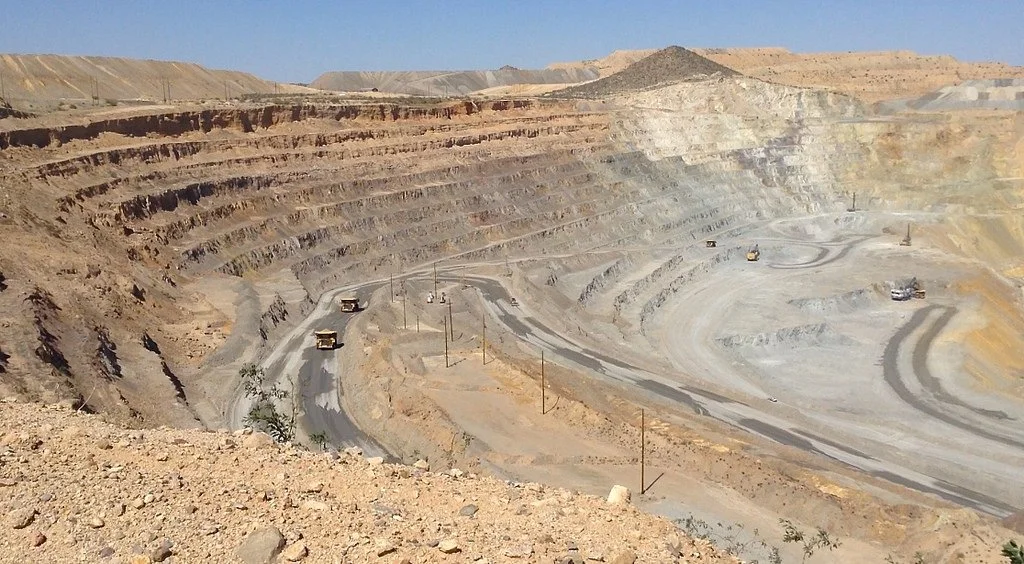
With respect to my work on thematic issues, I have continued work on my study on extractive industries affecting indigenous peoples. As I have noted previously, and as made evident by numerous statements at this and previous sessions of the Forum, the issue of extractive industries is one of the most common pressing concerns of indigenous peoples worldwide, representing a range of human rights problems. My final report on this issue will be presented to the United Nations Human Rights Council in September. Over the past year, I have participated in several meetings to gather perspectives on the issue from indigenous peoples, Governments, and companies, including meetings in Australia, Norway, Sweden, the United Kingdom and the United States. Additionally, as part of my study, I launched an online forum to gather examples of specific extractive projects that are being carried out in or near indigenous peoples territories. I am grateful for the numerous contributions provided to me through these media from indigenous peoples, Governments, companies, and non-governmental organizations from around the world. My report this year will build onthe experiences I have examined with a view towards promoting the development of new models for extractive operations that fullyrespect and advance the rights of indigenous peoples.

Need to harmonize the myriad activities with the United Nations system that affect indigenous peoples

Mr. Chairperson,

Given that this year the Permanent Forum is engaged in a process of reviewing its work, I would like to provide a few comments of relevance to one of thecentral mandates of the Permanent Forum, which is to provide expert advice on indigenous issues to the programmes, funds and agencies of the United Nations. This year, my report to the General Assembly offered comments on the need to harmonize the myriad activities within the United Nations system that affect indigenous peoples, and I today would like to reiterate some of the comments I made in that report.

As those present are aware, the Declaration on the Rights of Indigenous Peoples, which was adopted by the General Assembly in 2007, calls upon the various components of the United Nations system to contribute to and promote the full realization of the rights affirmed in the Declaration. In this regard, the provisions of the Declaration also provide the principle benchmark for United Nations actions related to indigenous peoples.

In my report to the General Assembly, I provided an overview of the various processes and programmeswithin the United Nations system that are of particular relevance to indigenous peoples or about which indigenous peoples have expressed concern. These include processes and programemes related to UNESCO; the Food and Agriculture Organization; the World Intellectual Property Organization; and the World Bank Group; as well as processes carried out within the framework of United Nations treaties like the Convention on Biological Diversity and the United Nations Framework Convention on Climate Change. [emphasis added]

I note that a number of these institutions and procedures within the United Nations system have done important work to promote the rights of indigenous peoples. However, the agencies, funds, programmes and intergovernmental organizations of the United Nations should do more to develop or further pursue initiatives within their respective work areas to advance respect for the rights of indigenous peoples. I make a series of specific recommendations about how these institutions should ensure that the design and execution of their various activities and programmes are consistent with and reinforce the Declaration on the Rights of Indigenous Peoples.

In addition, in my report to the General Assembly I looked at current United Nations processes for the development of new multilateral treaties or other instruments, like those being discussed within the World Intellectual Property Organization concerning the protection of genetic resources and traditional knowledge. The provisions of these new instruments, as I emphasize in my report, should be consistent with international standards concerning the rights of indigenous peoples, both in relation to indigenous participation in these processes as well as in terms of substantive outcomes. In no instance should a new international treaty or other instrument fall below or undermine the standards set forth in the Declaration or established in other international sources.

As for existing treaties or other normative instruments, including agency guidelines and policies, these should to be interpreted and implemented in a way that is consistent with the Declaration on the Rights of Indigenous Peoples, whether or not the specific texts of these instruments reflect language that exactly matches the terms of the Declaration. If a text is such that it cannot be applied consistently with the Declaration, it should be amended or reformed.

I hope that the Permanent Forum will continue to build upon and strengthen its important work contributing the processes within the United Nations system that affect indigenous peoples, and that my own work on this issue will be of some usefulness in this regard. I also note that the United Nations Inter-Agency Support Group on Indigenous Issues, in which the Permanent Forum plays a key role, should continue to strengthen its efforts to promote and harmonize indigenous issues within the United Nations system.

Mr. Chairman,

I would like to make special mention of the upcoming World Conference on Indigenous Peoples, which will be held in 2014 as a high-level plenary meeting of the General Assembly. In December last year, I participated in a meeting in Guatemala together with members of the Permanent Forum and the Expert Mechanism on the Rights of Indigenous Peoples,during which we discussed our roles in this event. As I have stated in the past, I see the World Conference as providing four important opportunities. First, it can contribute to the development of new measures for the direct participation of indigenous peoples in United Nations meetings; second, it can help to advance greater and more concerted efforts within the United Nations system to promote the rights of indigenous peoples; third, it can assist in promoting action at the national and local levels to secure the realization of indigenous peoples’ rights; and finally, it can be a cause for celebrating indigenous peoples and their contributions worldwide.

Mr. Chairperson,

I would like to conclude by expressing my gratitude for the opportunity to address the distinguished members of the Permanent Forum and representatives of indigenous peoples and States present today. As always, I am committed to cooperating with the Permanent Forum in the shared pursuit of promoting and securing the full enjoyment of the rights of indigenous peoples.

Thank you Mr. Chairperson, and all those present, for your kind attention.


Go to Professor Anaya’s website at http://unsr.jamesanaya.org/ and look under “documents” for copies of his reports.

Posted in News | Leave a comment

Post a Comment

Your email is never published nor shared. Required fields are marked *

*
*

You may use these HTML tags and attributes: <a href="" title=""> <abbr title=""> <acronym title=""> <b> <blockquote cite=""> <cite> <code> <del datetime=""> <em> <i> <q cite=""> <strike> <strong>

The Division for Social Policy and Development of UNDESA is organizing the 12th Session of the Permanent Forum On Indigenous Issues from 20 to 31 May 2013. More than 2,000 indigenous participants from all regions of the world are gathering in New York for the session – the second largest event held at UN Headquarters each year.

For the first time, the meeting is going “PaperSmart” this year. In the interest of reducing the UN’s carbon footprint, information is available in various digital formats – through an e-Portal – with print-on-demand services in meetings rooms.
Except for the opening, which will take place in the General Assembly Hall, the meeting is held in the newly renovated Trusteeship Council Chamber. However, the Capital Master Plan has presented some logistical hurdles, especially for the cultural event to be held in the evening of 21 May in the Visitors’ Lobby, where it is harder to accommodate the performers and the numerous guests expected.
With youth as one of themes in focus since last January, when the Forum convened an Expert Group Meeting on Indigenous Youth, a great number of young indigenous people are attending the session. Several indigenous persons with disabilities will also attend the meeting and raise awareness for the particular challenges they face. Indigenous women are keeping the spotlight on issues such as violations of their rights, but also on their role as leaders and actors of change.
“As every year, many crucial themes are brought before the Forum, and with the participation of Member States, UN agencies, NGOs and indigenous peoples’ organization, the Forum will also tackle some of the historic challenges coming up, such as the post-2015 development agenda and the 2014 World Conference on Indigenous Peoples,” said Chandra Roy-Henriksen, the Chief of the Secretariat of the Permanent Forum on Indigenous Issues.
Opening 
The two-week session is opening today, 20 May, at 11a.m. in the General Assembly Hall, with statements by the Vice-President of the 67th Session of the General Assembly, the Vice-President of the Economic and Social Council, and the Under-Secretary General for Economic and Social Affairs, preceded by a welcome by the Chief of the Onondaga Nation, Todadaho Sid Hill.
Cultural Event
A cultural event with indigenous musicians and dancers from around the world – including Azar from Algeria, Ch’uwa Yaku from Bolivia, and Silverclouds from the United States – will take place on Tuesday evening, 21 May, starting at 6:15 p.m. in the Visitors’ Lobby.
Side Events
More than 70 side events, organized by Member States, UN entities, other intergovernmental organizations, NGOs, the Secretariat of the Permanent Forum and other stakeholders, will highlight various aspects of indigenous issues. The full list of side events can be found here.
Posted in Events, News | Leave a comment

Post a Comment

Your email is never published nor shared. Required fields are marked *

*
*

You may use these HTML tags and attributes: <a href="" title=""> <abbr title=""> <acronym title=""> <b> <blockquote cite=""> <cite> <code> <del datetime=""> <em> <i> <q cite=""> <strike> <strong>

Tribal Link is thrilled to share this BBC profile on Tuwe Huni Kuin, our 2012-2013 Indigenous Fellow! The piece is currently  featured on the BBC World News homepage as well as yesterday’s episode of the Katty Kay Show on BBC World News/PBS. Our thanks to BBC for this incredible opportunity and to Tuwe for the wonderful work that he is doing in NYC on behalf of his community.

All of Tribal Link’s work is focused on linking indigenous leaders to the opportunities they say they need to work in support of their communities’ needs, issues, and visions. Our supporters make this possible. Please donate today and help us continue our work.


Posted in Indigenous Voices, News | Tagged , , , , , , | Leave a comment

Post a Comment

Your email is never published nor shared. Required fields are marked *

*
*

You may use these HTML tags and attributes: <a href="" title=""> <abbr title=""> <acronym title=""> <b> <blockquote cite=""> <cite> <code> <del datetime=""> <em> <i> <q cite=""> <strike> <strong>

Tuwe Huni Kuin, Tribal Link’s 2012-2013 Indigenous Fellowship recipient will participate in a special program in the United Nations General Assembly Hall on February 14, 2013 United for a Culture of Peace through Interfaith Harmony to celebrate completion of the third annual World Interfaith Harmony Week.

Tuwe will present a traditional prayer in his indigenous language, Huni Kuin, as part of the programme’s “Symphony of Prayers” alongside representatives of 12-15 world religions and faith traditions. Each will recite prayers or readings. Tuwe will be the first of this group to present.

“United for a Culture of Peace Through Interfaith Harmony” is being hosted by H.E. Mr. Vuk Jeremić, President of the 67th Session of the UN General Assembly, along with UNESCO and The Committee of Religious NGOs at the United Nations, with the co-sponsorship of various countries as well as support from additional nongovernmental organizations.  It will be a unique and uplifting call for peace featuring distinguished speakers, music, representatives from diverse religious traditions and a World Peace Flag Ceremony.

“United for a Culture of Peace Through Interfaith Harmony” is open to the public with advance registration, but registration has closed as Hall is filled to capacity. Information is available at www.unitedforacultureofpeace.info. There will be a security check-in at the UN Visitors Entrance for registered attendees beginning at 9:00 a.m. on February 14. A photo ID will be required for admission. The event will also be webcast live from the United Nations at http://webtv.un.org.

Tribal Link Foundation is a member of the event’s planning committee. All other supporters include:

Co-Sponsors:
The Permanent Mission of Guatemala to the United Nations
The Permanent Mission of the Hashemite Kingdom of Jordan to the United Nations
The Permanent Mission of Iraq to the United Nations
The Permanent Mission of the Republic of Kazakhstan to the United Nations
The Permanent Mission of Malaysia to the United Nations
The Permanent Mission of New Zealand to the United Nations

With the Support Of:
The Permanent Mission of Libya to the United Nations
The Permanent Mission of the Republic of the Philippines to the United Nations
The Permanent Mission of Samoa to the United Nations
The Permanent Mission of Zimbabwe to the United Nations
The World Peace Prayer Society/The Goi Peace Foundation

In Cooperation With:
Global Movement for the Culture of Peace
NGO Committee on Freedom of Religion or Belief
NGO Committee on Spirituality, Values & Global Concerns-NY
NGO Committee on the United Nations International Decade of the World’s Indigenous Peoples
Spiritual Caucus at the United Nations
Values Caucus at the United Nations


Posted in News | Leave a comment

Post a Comment

Your email is never published nor shared. Required fields are marked *

*
*

You may use these HTML tags and attributes: <a href="" title=""> <abbr title=""> <acronym title=""> <b> <blockquote cite=""> <cite> <code> <del datetime=""> <em> <i> <q cite=""> <strike> <strong>

The Expert Group Meeting on indigenous youth is organized following a decision by the Economic and Social Council, authorizing a three day international expert group meeting.

The focus of the 2013 meeting is Indigenous Youth: Identity, challenges and hope: Articles 14, 17, 21 and 25 of the United Nations Declaration on the Rights of Indigenous Peoples. The results of the meeting will be reported to the Permanent Forum on Indigenous Issues at its twelfth session in May 2013.

We are proud to announce that two of the 2012 Project Access participants have presented their issues and perspectives during this meeting: Ms. Meenakshi Munda (Munda, Philippines) and Ms. Andrea Landry (Anishaabe (Obibway) Pays Plat First Nation, Canada).

Please visit the website of the UN Permanent Forum on Indigenous Issues for more information.

Posted in News | Leave a comment

Post a Comment

Your email is never published nor shared. Required fields are marked *

*
*

You may use these HTML tags and attributes: <a href="" title=""> <abbr title=""> <acronym title=""> <b> <blockquote cite=""> <cite> <code> <del datetime=""> <em> <i> <q cite=""> <strike> <strong>

Dear Friends:

Tribal Link was founded on the principle that we must respond to the urgent needs of indigenous communities before that moment of urgency is lost. Twenty years later we remain deeply committed to that philosophy, which has helped shape our work with education, entrepreneurship, and capacity building for communities worldwide.

The first time I responded to indigenous peoples’ needs was in 1992. I met a group of indigenous delegates at the UN and I felt strongly that I should ask them what I could do to help them. They articulated the need for adequate documentation of Kari Oka, a convergence of 700 indigenous leaders taking place before the Earth Summit in Rio de Janeiro, Brazil that year. I put together a team of photo, video and audio professionals and traveled to Brazil to do just that. There I committed to helping the world’s indigenous peoples however I could. Since then, Tribal Link has continuously provided access to the resources indigenous communities need to take their work to the next level, regardless of region or issue.

In June, Tribal Link returned to Brazil for Rio+20, the follow up conference to the Earth Summit. There, we followed the work of the indigenous delegates to witness their contributions and concerns. It was a privilege to attend Kari Oka 2 and the Rio+20 International Conference of Indigenous Peoples on Self-Determination and Sustainable Development (ICIP), which produced declarations that clearly outlined the enormous stakes for indigenous communities concerning sustainable development. In an historic moment on June 21, hundreds of delegates marched from Kari Oca 2 to the high-level session to hand-deliver their declaration for the protection of Mother Earth.

Other Tribal Link activities in support of indigenous peoples at Rio+20 included a side event (Indigenous and Local Communities and the Private Sector), partnership with UNDP Equator Initiative’s Community Aldeia (a ten-day community dialogue space that brought together winners of their Equator Prize, and other civil society leaders), and funding Ghazali Ohorella’s participation in a panel discussion on food sovereignty entitled Standing Together for our Food Sovereignty, Traditional Cultures, and Ways of Life.

It was also at Rio+20 that we invited Tuwe Huni Kuin to be the recipient of our first Indigenous Fellowship, which aims to assist indigenous peoples from around the world in fulfilling their educational and cultural/capacity building needs by enabling them to pursue training in their field of interest with the ultimate goal of improving life in their community

Your support is essential to the continuation of our work. Contributions can be made at TribalLink.Org/Donate and are tax deductible.

Best wishes for the holidays,

Pamela Kraft, Executive Director

Posted in News | Leave a comment

Post a Comment

Your email is never published nor shared. Required fields are marked *

*
*

You may use these HTML tags and attributes: <a href="" title=""> <abbr title=""> <acronym title=""> <b> <blockquote cite=""> <cite> <code> <del datetime=""> <em> <i> <q cite=""> <strike> <strong>

  • June  2013
    Mon Tue Wed Thu Fri Sat Sun
       
      1 2
    3 4 5 6 7 8 9
    10 11 12 13 14 15 16
    17 18 19 20 21 22 23
    24 25 26 27 28 29 30
  • Upcoming Events

    International Expert Group Meeting on Indigenous Youth 1/28-1/31/13

    UN Headquarters, New York 29-31 January 2013 Venue: Conference Room 5–North Lawn Building The Expert Group Meeting on indigenous youth is [...]

    Twelfth Session of the Permanent Forum On Indigenous Issues, May 20-31, 2013

    The Division for Social Policy and Development of UNDESA is organizing the 12th Session of the Permanent Forum On Indigenous Issues [...]

Project Access

Project Access supports indigenous peoples’ participation in international meetings and conferences where decisions are being made that affect their rights, cultures and livelihoods.

Girls Education Program

Education, Leadership, and Rights Training for Indigenous Girls in East Africa.

Indigenous Entrepreneurship

This Program supports indigenous peoples' development of sustainable enterprises in their communities.